Exterior Facades & Cladding
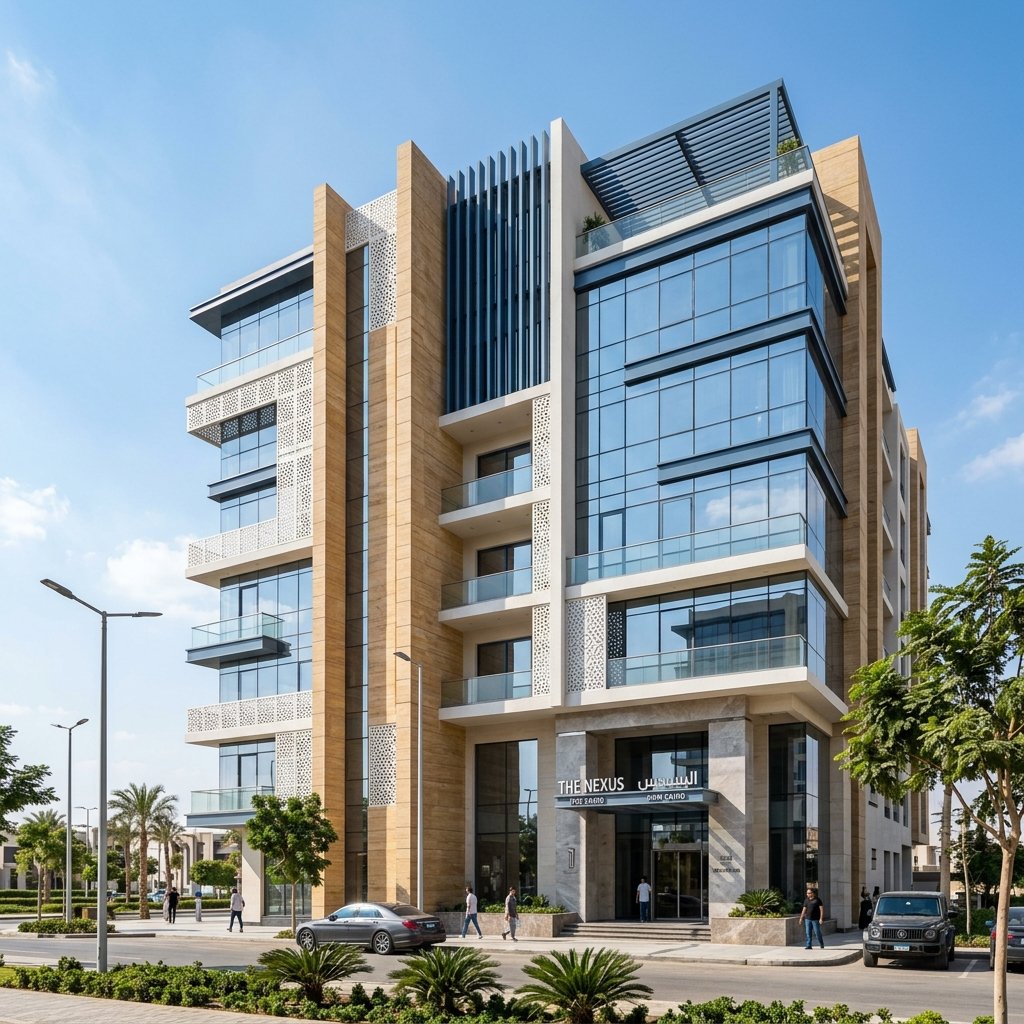
The facade is the first thing a visitor reads in your building, and the first line of defense against the climate. Heat, dust, coastal humidity and strong sun punish weak facade work — a tile that falls after five years did not fall because of the material, but because of the fixing system and the detailing. That is why we design and install modern building facades using the latest materials and technologies — for superior aesthetics and maximum protection against Egypt's harsh climate conditions. We select fixing systems, anchors, jointing and insulation that match each governorate's conditions — a Hurghada facade faces salt air that a Beni Suef facade never sees, and an insulation detail in New Cairo differs from a building directly on the sea.
- Natural Hashma stone in all grades and colors
- GRC (Glass Fiber Reinforced Concrete) panels
- Structural glass curtain wall systems
- EIFS thermal insulation systems
- Decorative aluminum profiles & cladding
- External tile systems & fire code compliance
Scope of work
- Natural Hashma stone in all grades and colors — from heysam to first and second sort, each grade with its correct place in the building and its budget.
- GRC (Glass Fiber Reinforced Concrete) panels — for contemporary elevations and large decorative elements.
- Structural glass curtain wall systems — for commercial and administrative facades.
- EIFS thermal insulation systems — with decorative aluminum cladding, improving the building's thermal performance.
- Decorative aluminum profiles & cladding, external tile systems and fire code compliance.
- Re-cladding existing buildings — facade renovation and re-cladding is a dedicated part of our renovation scope, because re-cladding a standing building starts from assessing the surface and the old fixing before any material decision.
Hashma stone, done properly
Hashma is a widely used facade stone in Egypt, and the difference between grades is not only appearance: density, color regularity and natural flaws determine where each grade is used and how it is fixed. Heysam is the premium, densest sort with the most regular color — the reference grade for high-end facades; first sort has good regularity with slight natural variation and is the common choice for good residential work; second sort shows wider color variation and is accepted where the budget governs, with visible spotting expected. We install it in all grades and cuts with mechanical fixing where spans or heights demand it, correct mortar bedding, and pointing that keeps water out — the difference between a facade that ages gracefully and one that sheds tiles in five years. Good practice in bedding is full coverage suited to the tile size and weight, with properly executed expansion joints. Good practice says water behind the stone is the beginning of detachment. In coastal cities, fixing materials must withstand salt-laden air, and good practice checks this at selection, not after installation.
Modern systems: GRC, glass, EIFS
For contemporary elevations we execute GRC panels, structural glass curtain walls and EIFS thermal insulation with decorative aluminum cladding — detailed shop drawings first, mock-ups where the design is sensitive, then full installation. Joint details and fixing points are typically settled on the shop drawings before site work begins, because correcting them on scaffolding costs far more than resolving them on paper.
Common facade execution mistakes
- Choosing the material before the fixing system: good practice starts from the building's condition, height and environment; the material follows.
- Partial mortar bedding: voids behind the tile are future water pockets; full coverage suited to size and weight is the rule.
- Neglected expansion joints: stone and panels move with heat; without properly executed joints, bowing appears, then detachment.
- Rushed, poor pointing: pointing is the first defense line against water entry, not a final cosmetic touch.
- Copying a detail from another project: a detail that succeeds inland can fail on the coast; every site is treated in its own environment.
How to compare facade quotations
When comparing contractor offers, compare item by item: material type, grade and source; fixing system (mortar, mechanical or sub-frame); joints, pointing and insulation; scaffolding and duration; and the testing and handover item. A cheaper offer that deletes mechanical fixing or insulation is not actually cheaper — it only moves the cost into future maintenance years. Good practice requires a detailed, itemized offer before work starts, so you know exactly what you are paying for.
Execution steps
- Survey and assessment: the building's condition or drawings, and the site's climate conditions.
- System and material selection: by governorate, height and budget — alternatives priced item by item.
- Shop drawings and a mock-up where the design is sensitive.
- Surface preparation and fixing per each material's system (mortar / mechanical / sub-frame).
- Joints, pointing and insulation — the details that decide the facade's life.
- Item-by-item handover before the scaffolding comes down.
Frequently Asked Questions
Which facade material lasts longest in Egypt?
Correctly installed natural Hashma stone and GRC systems have proven multi-decade durability locally; the deciding factor is always fixing quality and detailing, not the material alone. (existing — kept as-is)
Do you design the facade or only execute?
Both. We can develop the facade design with you or execute from your consultant's drawings. (existing — kept as-is)
Can you re-clad an existing building?
Yes — facade renovation and re-cladding is a dedicated part of our renovation scope. (existing — kept as-is)
What is the difference between heysam, first sort and second sort Hashma?
Heysam is the premium, densest sort with the most regular color — the reference grade for high-end facades. First sort has good regularity with slight natural variation and is the common choice for good residential work. Second sort shows wider color variation and more natural flaws, and is accepted where the budget governs, with visible spotting expected.
How does a coastal facade differ from an inland one?
Salt-laden air attacks metal and mortar alike, so fixing and joint materials are chosen to withstand salts, and insulation and pointing get extra care. The general principle: the fixing system is designed for the site's environment, not copied from a previous project.
Can a facade be executed on an occupied or operating building?
Each case is studied on its own; the decision depends on the building's condition, the chosen fixing system and the site's safety requirements.
When is mechanical fixing mandatory for stone?
Good practice requires it where spans or heights demand it; only the technical assessment of sizes, height and site conditions settles the final system.
Does Hashma stone need periodic maintenance?
Maintenance is low but not zero: washing from time to time, and inspecting the joints after the first years. Neglected joints let water behind the stone — and water behind the stone is the beginning of detachment.